"data-auto-format="rspv" data-full-width>
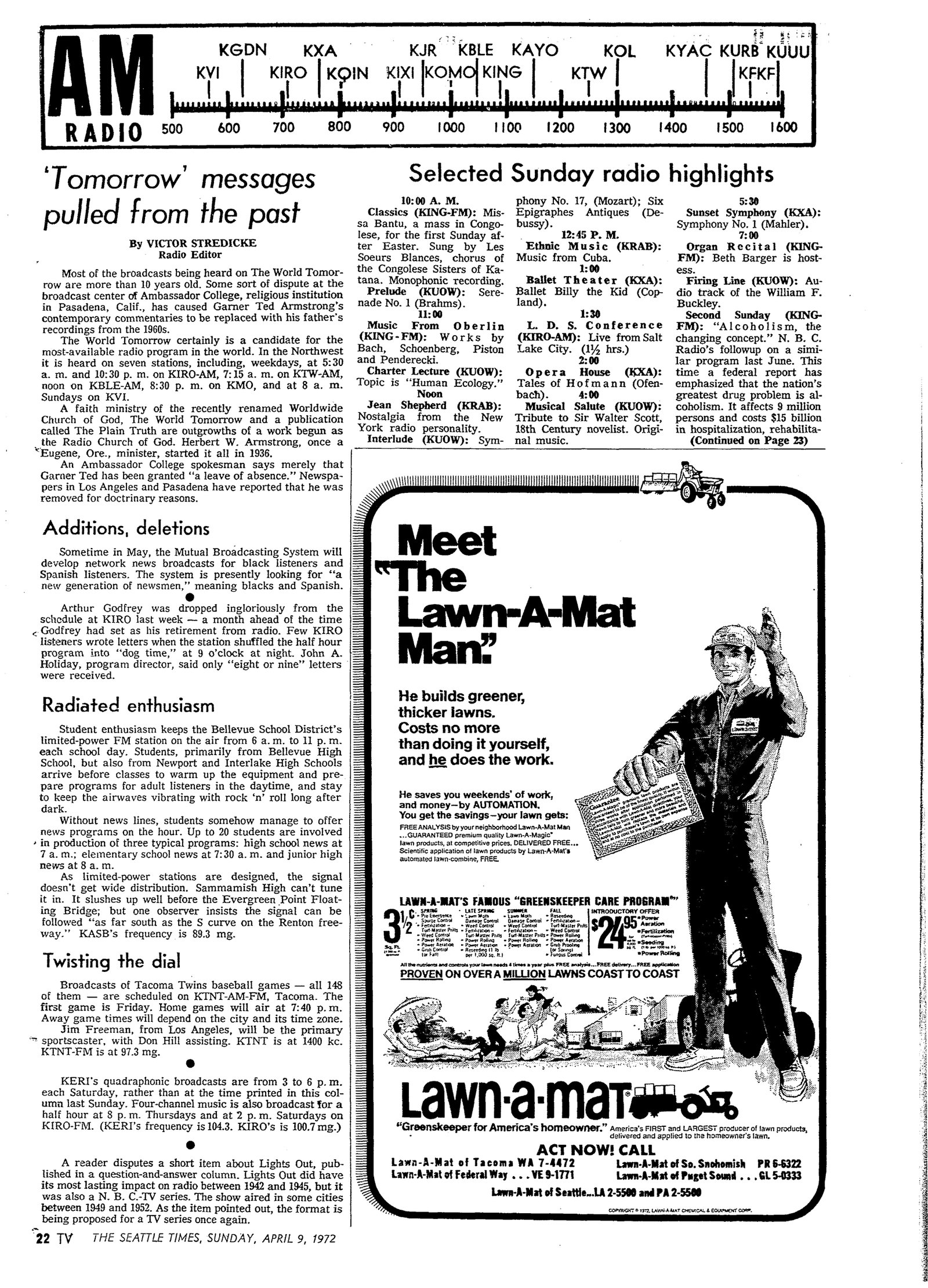
Arthur Godfrey Kicked To The Curb By KIRO
"data-auto-format="rspv" data-full-width>
"data-auto-format="rspv" data-full-width>
Click on picture to ENLARGE
"data-auto-format="rspv"
data-full-width>
Victor StredickeVictor Stredicke is a longtime figure in Seattle-area media, best known as the former radio-TV editor for The Seattle Times. He wrote a dedicated column covering local and regional radio broadcasting, including station changes, programming, personalities, controversies, and industry news. This legacy is the driving force behind QZVX (qzvx.com). In 2023, Victor Stredicke was honored at the Radio Conference Call meet-up for his longtime contributions as a newspaper radio-TV columnist, with appreciation from readers and people he had covered.
Recent Posts
A novelty tune, about our favorite topic, popular radio of the '60s, '70s... Mark Dinning/Top…
October 1966 - Los Angeles Times
Ron Leonard from KYTE 970/Portland in 1978. (13:58)
1965 The format change takes place... Robert W. Morgan Scotty Brink Gary Mack Don Steele…
Jim Acosta, the former CNN anchor who now hosts his own podcast since leaving CNN…
View Comments
From the Internet Archive, one of our Lost Comments---
Maple Valley Mike says:
March 31, 2017 8:51 pm at
Godfrey, as I remember, had a daytime talk show on the radio much like Mike Douglas and Merv Griffen had on TV. He was simply a victim of America’s changing tastes.
Arthur Godfrey was a massive radio and TV star in the early 1950s — often called one of the most powerful figures in broadcasting at the time.
He hosted hugely popular morning programs like Arthur Godfrey Time (simulcast on CBS radio and TV), where he cultivated a warm, folksy, "family-man" image as a ukulele-strumming everyman who discovered and promoted new talent (known as his "Little Godfreys").
Julius La Rosa was a young Italian-American singer (in his early 20s) whom Godfrey discovered while La Rosa was serving in the Navy. Godfrey brought him onto the show in late 1951, and La Rosa quickly became a breakout star. He had major hits like "Eh, Cumpari" and "Anywhere I Wander," and his popularity soared — sometimes even rivaling or outshining Godfrey's own draw among viewers/listeners.
Tensions built for a few reasons: La Rosa's rising fame reportedly made Godfrey jealous or insecure about being upstaged.
La Rosa hired an agent (to handle outside opportunities and renegotiate his deal), which violated Godfrey's expectation of loyalty and control over "his" talent.
There were reports of other friction, like La Rosa refusing mandatory ballet lessons that Godfrey imposed on performers (he saw them as effeminate or unnecessary).
Godfrey demanded a certain "humility" from his cast members, treating the show like a family where he was the unquestioned patriarch.
A dramatic moment came during a live broadcast of Arthur Godfrey Time. After the TV portion ended (so the firing was heard only on radio by millions), Godfrey had La Rosa sing "Manhattan" (a callback to his first appearance on the show). Right after the song ended, Godfrey announced it was La Rosa's "swan song" on the program — effectively firing him live on air. He told La Rosa he was now free to be "his own star" and cited a lack of humility as the key reason (along with the agent issue). No one else on the show staff knew it was coming (though CBS execs had been informed), and La Rosa was reportedly stunned and didn't immediately grasp the full meaning.
The public reaction was huge — it was seen as shocking, cruel, and humiliating. The press pounced on it, portraying Godfrey as a tyrannical boss rather than the lovable figure he projected. It severely damaged his carefully built image and marked the beginning of a long decline in his popularity (he later fired many more staffers in similar ways, drawing even more criticism).
La Rosa, meanwhile, went on to have a solid career as a singer, nightclub performer, and TV guest (appearing on shows like Ed Sullivan), though the firing became the thing most people remembered about him for decades. In later interviews, he said he harbored no grudge and even reflected on what "humility" might have meant in Godfrey's eyes. There are audio recordings and recreations of the moment available online (like on YouTube), and it's often cited as an early example of the dark side of live TV/radio celebrity power dynamics.
https://www.youtube.com/watch?v=6s75wpdiri8