Asked what he thought wired radio might do to the broadcasting business as now organized, Hough said: “Our conclusions are that present day radio and wired radio will not be competitors, but that one will supplement the other. The telephone did not put the telegraph out of business. Electric lighting did not end gas plants. Wired radio will do things that space radio can not do, but it will leave plenty of room for space radio to grow especially in rural districts where comparatively few homes are wired.”
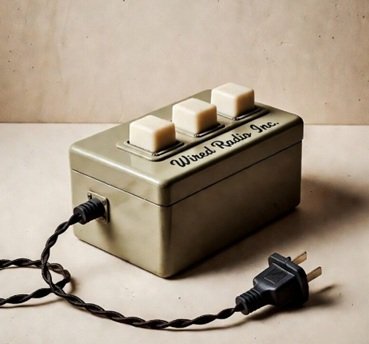
These plans, said Hough, are the result of three years of experimentation by a staff of radio engineers working in Washington, Cleveland, Staten Island and New Jersey. Hough said it was but a short time before the American public would have a de luxe radio service over electric lighting wires at a cost of around $2 per month. In describing the type of instrument which will be used in this new service, he said: “We shall eventually give the American people a small box with nothing on it but three push buttons and a silk cord. They’ll plug the cord into any lamp socket, push a button and out will come a program feature either through head phones or loud speaker.”