A reader submits:
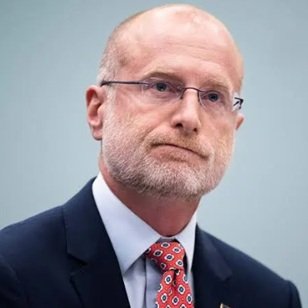
“Look at the results so far. PBS, defunded. NPR, defunded. Joy Reid, gone from MSNBC. Sleepy-eyes Chuck Todd, gone. Jim Acosta, gone. John Dickerson, gone. Stephen Colbert is leaving. CBS is under new ownership, and soon enough, CNN is going to have new ownership as well. So, we’re not at the point yet where we’re raising the ‘mission accomplished’ flag, but President Trump is taking on the fake news media, and President Trump is winning.”
Quick segue to Status:
“For a sitting FCC chairman — the remarks to a partisan political conference amounted to saying the administration views the news media not as an institution to be protected, but as an enemy to be silenced and controlled — and that’s exactly what they’re doing.
 “Carr wasn’t speaking hypothetically or abstractly — he was boasting about a deliberate, politically motivated campaign to reward allies and punish critics. For the first time, the FCC chairman made clear that the ‘free speech’ he claims to protect is being wielded as a tool in a partisan battle over who controls the nation’s most powerful media platforms.”
— Status’ Jon Passantino
Hard to see this any other way but Carr celebrating the weakening of the press in America.
***************
Carr’s actions are not unprecedented; they echo decades of FCC chairs exercising (or yielding to) political influence over broadcasting and communications policy.
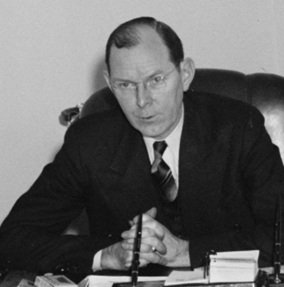
A concrete 1941 example: The FCC renewed a Boston radio station’s license only after it effectively agreed to silence Roosevelt critics. Roosevelt reportedly “put the blow torch” on Fly to act against perceived media foes.
Contemporary accounts and later historical analyses describe this as explicit executive bullying to protect political power, not neutral public-interest regulation. Similar tactics continued under later administrations.
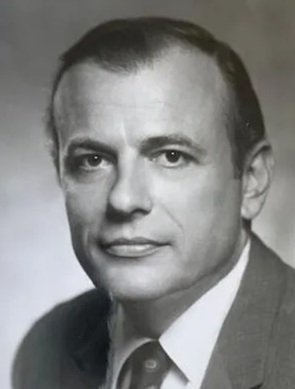
The Kennedy administration (with Democratic National Committee backing) monitored stations airing conservative content, filed fairness complaints demanding free reply time, and coordinated IRS audits to financially burden stations. This drove conservative broadcasters off hundreds of stations, suppressing talk radio for over a decade.
JFK told Henry: “It is important that stations be kept fair,” signaling targeted enforcement.
Bill Ruder (Kennedy Assistant Secretary of Commerce): “Our massive strategy [was] to use the fairness doctrine to challenge and harass the right-wing broadcasters and hope that the challenges would be so costly to them that they would be inhibited and decide it was too expensive to continue.”
Lyndon B. Johnson continued the campaign post-assassination.
Declassified memos, participant admissions, and FCC records confirm this was a coordinated censorship effort against political opponents, not neutral enforcement. The doctrine was rarely used pre-Kennedy but became a partisan tool.
Nixon later used similar tactics, e.g., threatening CBS over Vietnam coverage and proposing cross-ownership rules to pressure The Washington Post owner Katharine Graham during Watergate.
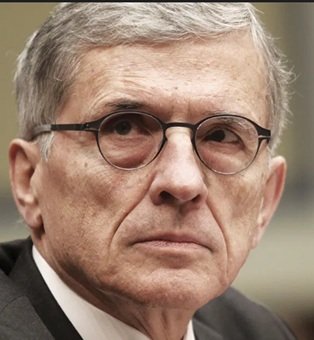
Evidence of White House pressure: President Obama publicly released a video endorsing Title II.
Days before, White House official Jeff Zients (then National Economic Council director) made an unprecedented office visit to Wheeler.
Activists blockaded Wheeler’s driveway (twice in one day) demanding Title II; Wheeler later emailed staff implying they were not acting independently of the White House.
Republicans later released emails showing the Obama administration’s direct involvement influenced the shift.
Wheeler initially favored a lighter approach but aligned with Obama’s position after this pressure. Critics (including then-Commissioner Ajit Pai) called it a partisan reversal driven by politics rather than new evidence.
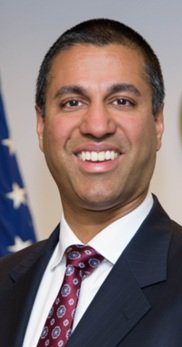
These cases illustrate a pattern: FCC chairs have sometimes yielded to (or actively enabled) presidential pressure to weaponize licensing, content rules, or classifications against political foes or for partisan wins. The Fairness Doctrine was repealed in 1987 by Reagan-era FCC Chairman Dennis Patrick on First Amendment and free-market grounds, explicitly to end such abuses.
Former chairs (including Wheeler and Republican Al Sikes) have criticized later politicization while defending their own records as public-interest driven.