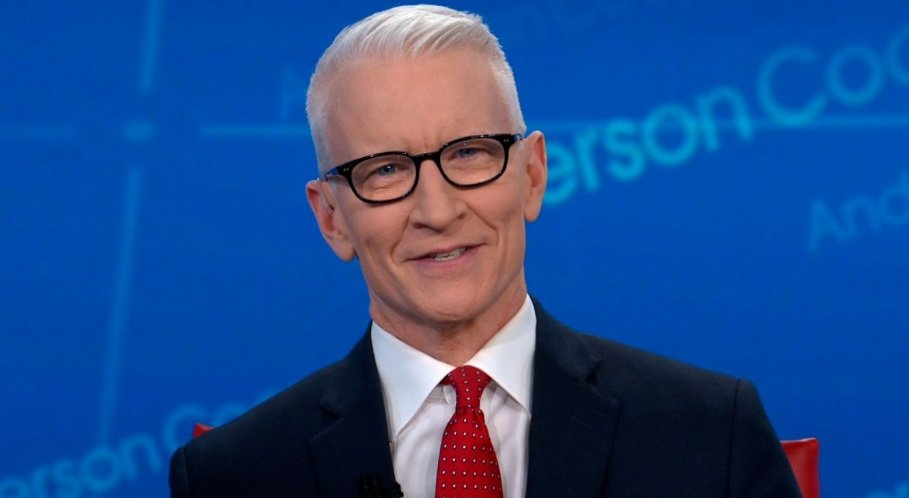
 Anderson Cooper announced in mid-February 2026 that he would not renew his contract with 60 Minutes after nearly 20 years as a correspondent. He wrapped up his final contributions by the end of the 2025–2026 season with an emotional sign-off this week.
Cooper cited family priorities as the main driver. He has two young sons Wyatt and Sebastian, around 4–5 years old with his ex-partner Benjamin Maisani. In his statement: “For nearly twenty years, I’ve been able to balance my jobs at CNN and CBS, but I have little kids now and I want to spend as much time with them as possible, while they still want to spend time with me.”
He plans to continue anchoring Anderson Cooper 360° on CNN. CBS thanked him and left the door open for a return.
Reported Contributing FactorsMultiple media outlets (including Status by Oliver Darcy, and others) reported that discomfort with CBS News’ new editorial direction under Editor-in-Chief Bari Weiss (appointed in late 2025) played a role. Sources described Cooper as uneasy with the “rightward” or “heterodox” shift at the network amid ownership changes at Paramount (under David Ellison).
This involved moving away from what critics called a left-leaning mainstream consensus toward more balanced scrutiny of all sides, including conservative perspectives, and prioritizing audience trust over traditional broadcast norms. In other words, the Liberal agenda would no longer guide 60 Minutes reporting.
Specific reported examples of changes affecting 60 Minutes and contributing to tensions: Cooper’s discomfort with the “rightward” direction.
Delaying or altering stories for balance — Weiss reportedly held or required changes to a 60 Minutes segment on a controversial El Salvador prison (CECOT) used for deportations, insisting on including the Trump administration’s perspective (which had declined comment). Critics saw this as injecting “both-sides” framing that softened investigative edges. Both sides, Cooper can’t abide.
Editorial push for broader viewpoints — Weiss’s approach emphasized “holding both American political parties to equal scrutiny,” featuring stronger voices from across the spectrum, and appealing to “independently minded” audiences disillusioned with legacy media. This included plans for more scoops, harder-hitting reporting, reduced “soft programming,” and integrating new contributors or younger talent aligned with her vision.
Staff and structural shakeups — Multiple exits, layoffs, and planned overhauls (e.g., “massive changes” post-season, potential producer/correspondent turnover). Some insiders viewed this as a purge of traditionalists uncomfortable with the new direction, leading to a more digital/streaming-focused, contrarian style. One departing producer cited a “sweeping new vision prioritizing… ‘heterodox’ journalism.”
Overall cultural shift — Weiss aimed to rebuild trust by challenging perceived elite bias and making coverage more “politically interesting” and relevant in a polarized era. Supporters saw this as refreshing; detractors (including some staff) called it a rightward/MAGA tilt that clashed with 60 Minutes’ longstanding investigative reputation. Obviously, Anderson Cooper cannot abide.





60 Minutes
Reader Submission • May 28, 2026
Bari Weiss, the editor in chief of CBS News, signaled a new direction for the nation’s top news program on Thursday, replacing the executive producer of “60 Minutes” with Nick Bilton, a longtime tech journalist and documentarian who has never worked in traditional broadcast news.
The appointment came as part of a significant shake-up at the venerable Sunday evening news program. Cecilia Vega, a correspondent, was fired on Thursday, as was the current executive producer, Tanya Simon, who had spent more than 30 years at the program.
Mr. Bilton, 49, is a former New York Times technology columnist and a filmmaker who has directed and produced documentaries on business and technology for HBO and Netflix.
— New York Times
And so it begins...
Reader Submission • May 27, 2026
CBS News declined to renew its contract with the “60 Minutes” correspondent Sharyn Alfonsi, six months after her segment on torture in Salvadoran prisons was pulled off the air abruptly by the news division’s editor in chief, Bari Weiss.
Ms. Alfonsi’s deal expired on Saturday. She said in a phone interview that her agent’s inquiries with CBS News over the past several weeks had been met with silence.
“It sends a chilling message to the entire newsroom,” Ms. Alfonsi said. “I think it was a deliberate choice to penalize a journalist for refusing to sanitize accurate reporting.”
Ms. Alfonsi remains employed at CBS, but with no contract in place, she said she had no expectation of returning to “60 Minutes.” “I’m not resigning,” she said. “If they want me gone because I did my job, they’ll have to fire me.”
— New York Times
CHANGES?
Reader Submission • May 18, 2026
The 58th season of 60 Minutes came to an end Sunday night. Network insiders said to expect ‘‘massive changes.” Layoffs are widely expected, and ‘‘People (at ‘60 Minutes’) are afraid and they’re waiting for something monumental to happen here.”
The biggest move (for now) is the departure of Anderson Cooper, who told audiences Sunday night, “I hope ‘60 Minutes’ remains ‘60 Minutes.’ There’s very few things that have been around for as long as ‘60 Minutes’ has and maintained the quality that it has.”
“While it remains unclear exactly how Weiss intends to overhaul the newsmagazine, the risk for its news division is obvious. ‘60 Minutes’ is not merely another network television program, but one of the last remaining successful news brands built almost entirely on institutional trust. Viewers tune in not simply because of the stories, but because of the credibility of the correspondents delivering them. If that continues to erode, whether through talent departures, editorial controversies, or the perception that the program is being reshaped to fit a new ideological vision, it is difficult to imagine the franchise’s ratings and image remaining unscathed.”
–Natalie Korach, Status