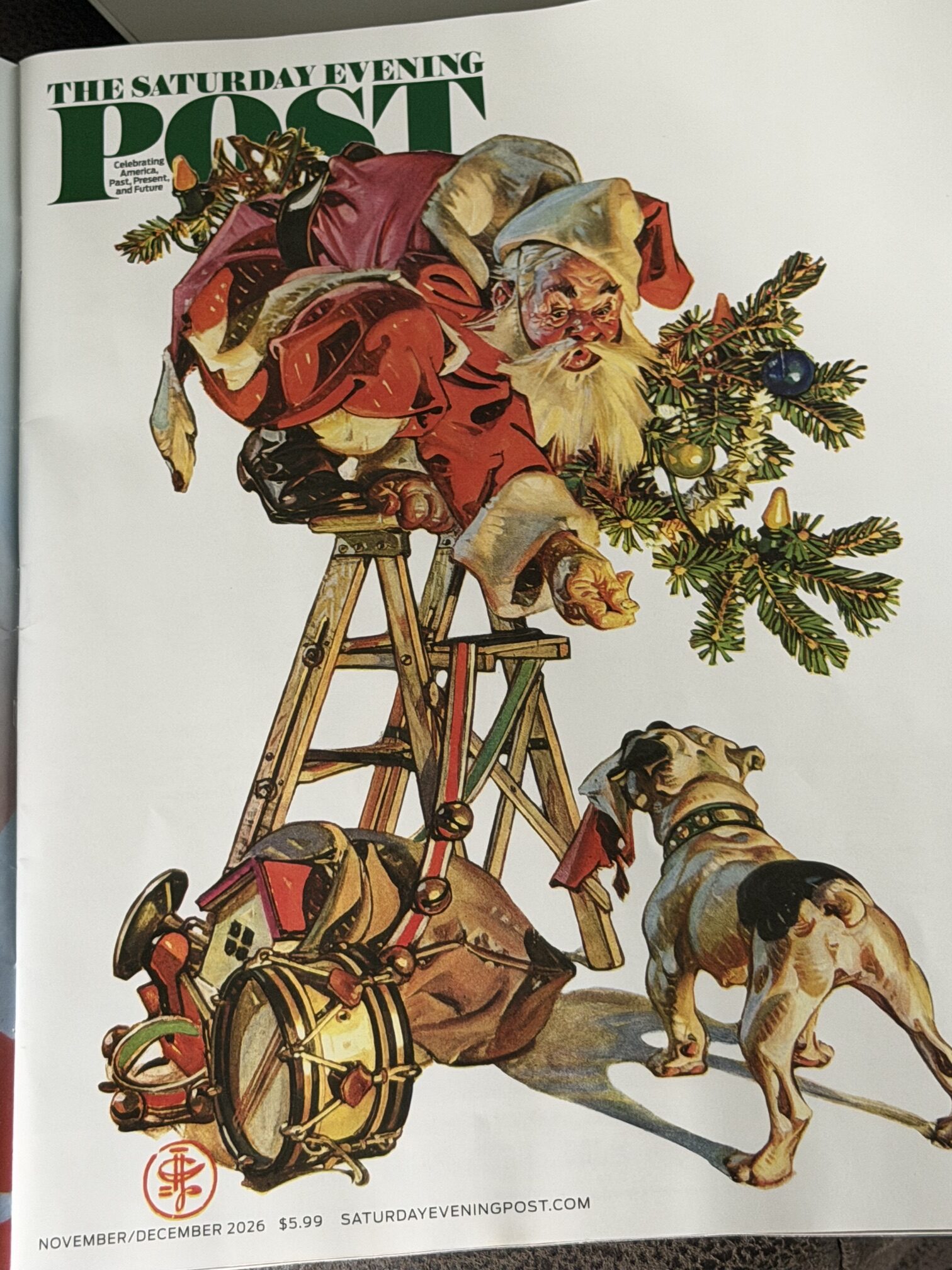
 The Saturday Evening Post will end its print edition after more than 200 years, with the January/February 2027 issue as its last. It will continue publishing new articles and fiction online, and its archives will remain available.
Publisher Joan SerVaas announced the decision in a letter to the magazine’s roughly 50,000 subscribers, citing rising production costs, declining advertising revenue, and shifting reader habits. She noted the print edition had become a financial drain on the nonprofit Saturday Evening Post Society (based in Indianapolis), which owns it. The move was especially personal for SerVaas, whose father, Beurt SerVaas, had rescued the near-bankrupt magazine decades earlier.
History
The magazine first appeared on August 4, 1821, in Philadelphia. It was printed in the same shop (and on presses associated with) where Benjamin Franklin had published the Pennsylvania Gazette. It began more as a newspaper/broadsheet than a modern magazine, covering local and national news, literature, poetry, and practical topics with a practical, somewhat moral tone. Early contributors included writers such as Edgar Allan Poe.
By the late 19th century its circulation had dwindled to around 2,000. In 1897, publisher Cyrus H.K. Curtis (already successful with Ladies’ Home Journal) bought it for $1,000. Under longtime editor George Horace Lorimer (1899–1936), it was transformed into a major national illustrated weekly aimed at a broad middle-class audience, emphasizing business, self-improvement, fiction, humor, and current events. Circulation soared into the millions (reaching peaks of several million weekly copies in the mid-20th century). It published stories and serials by authors including F. Scott Fitzgerald, Jack London (The Call of the Wild was serialized there), William Faulkner, Agatha Christie, Kurt Vonnegut, and many others.
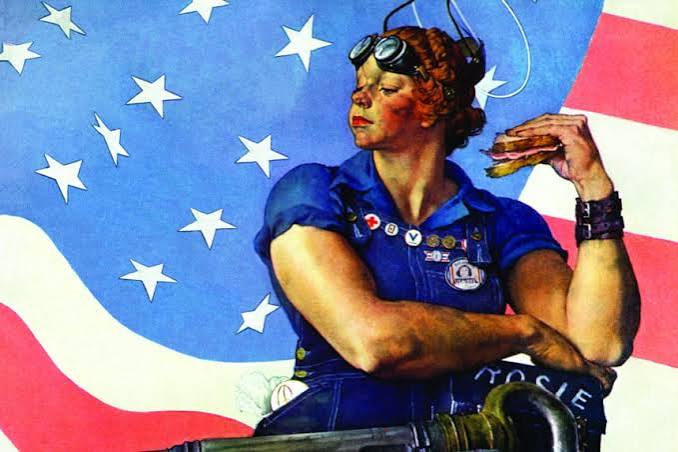
It became famous for its cover art, especially the more than 320 covers Norman Rockwell painted between 1916 and 1963. These idealized yet detailed depictions of everyday American life (and wartime imagery such as the 1943 Rosie the Riveter) defined mid-century popular visual culture. Other notable illustrators included J.C. Leyendecker.
Our Favorite Covers | The Saturday Evening Post
By the 1960s, competition from television, changing tastes, and advertising shifts led to declining readership. The magazine ceased publication after its February 8, 1969 issue. Indianapolis businessman Beurt SerVaas acquired the assets and relaunched it in 1971 as a quarterly (later bimonthly) focused more on health, nostalgia, and general interest. His wife, Cory SerVaas (a physician and journalist), played a major role in its revival. Ownership later moved to the nonprofit Saturday Evening Post Society. A redesign occurred in 2013, and the full historical archive is available online.
At its height the Post was one of America’s most influential general-interest magazines; the end of the print edition marks the close of a long chapter in American publishing while the brand continues digitally.