Jim Thornton, the Wheel of Fortune announcer since 2011, was fired by Sony Pictures Television on September 4, 2026, after an investigation tied to a May airline flight.
On May 14 he was on American Airlines Flight 1276 from Charlotte to Los Angeles. A passenger said she could see his laptop and reported disturbing chat-room messages that appeared to involve children. The crew alerted the pilot. Police met the plane at LAX, questioned Thornton briefly, and let him go. He was not arrested or charged. American Airlines confirmed officers met the flight after a customer complaint.
Sony suspended him on September 1 and said it was recasting the role while it investigated. TMZ then published photos a passenger said she took of his screen. Those images, according to reports, showed a chat forum (reached via the Tor browser in some accounts) with sexual talk that referenced minors….
Fox News is rolling out a large slate of 9/11 coverage for the 25th anniversary of the attacks on September 11, 2001.
FOX & Friends spends the week of September 7 on the road. Steve Doocy, who was on air the morning of the attacks in 2001, broadcasts from O’Hara’s Pub near Ground Zero, then Washington with Tunnel to Towers’ Frank Siller, then Shanksville at the Flight 93 site. On September 11, Kilmeade, Earhardt, and Jones are live from a Jersey City hotel overlooking the skyline; Doocy is at Ground Zero.
Daytime and afternoon shows (America’s Newsroom, The Faulkner Focus, Outnumbered, The Story, and others) add interviews and packages. America’s Newsroom is expected to carry the reading of victims’ names. Martha MacCallum interviews Cardinal Timothy Dolan and NYPD Commissioner Jessica Tisch.
FOX Nation added two specials: Paul Mauro’s Notes from Ground Zero (a former NYPD inspector returns to the site) and Born on 9/11: 25 Years with Harris Faulkner (people born that day).
FOX News Audio is running the podcast series FOX News Rewind: 9/11 plus live memorial coverage.
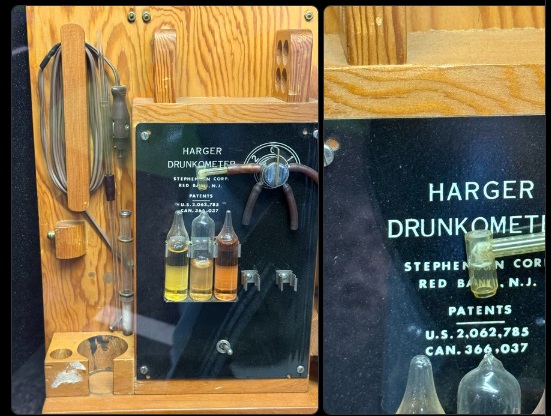 KIRO NewsRadio’s Charlie Harger posted that a distant relative invented the first breathalyzer. The Harger Drunkometer.
The Harger Drunkometer was the first practical roadside breath-alcohol tester, invented in 1931 by biochemist and toxicologist Rolla N. Harger of the Indiana University School of Medicine. It was patented in 1936 and became the leading method for estimating blood-alcohol content (BAC) until the mid-1950s.
Harger developed it after Prohibition ended and automobile use surged, when drunk-driving deaths rose sharply. Earlier methods required drawing blood or collecting urine, which were slow and not usable at the roadside. The Drunkometer offered a relatively portable chemical test that police could apply before an accident happened.
The name started as a joke. When people asked what the suitcase-sized apparatus was called, Harger and his colleagues replied “Drunkometer.” The name stuck.
How it worked: A suspect blew into a rubber balloon. The captured breath was then bubbled through an acidified potassium permanganate solution (pink or purple). Alcohol reduced the permanganate and changed the color; the greater the color change, the more alcohol was present. Officers estimated BAC with a simple formula Harger derived from the relationship that roughly 2,100 mL of alveolar air contains about the same amount of alcohol as 1 mL of blood. Later refinements also measured carbon dioxide in the breath to improve accuracy.
The kit was the size of a small suitcase and contained glass tubes, reagents, a balloon, and a measuring cylinder. Indianapolis police first used it on a large scale on New Year’s Eve 1938. By the late 1940s it was in use in dozens of U.S. cities and some foreign countries.
Thanks?